



The Work Starts Long Before Construction
Every infrastructure project is different, but construction is rarely the beginning of the story.
Before crews and equipment arrive, project teams may be evaluating needs, studying possible solutions, securing funding, developing plans, coordinating with outside partners, and preparing a project for construction.
Although no two projects follow exactly the same path, a typical project journey may include:
Need → Study → Plan → Fund → Design → Coordinate → Procure → Build → Complete
Some stages may overlap, repeat, or take longer depending on the project. Other steps must be completed before the next phase can begin.
By the time construction starts, a significant amount of the project may have already happened.
Watch “Before the Ground Breaks” to see how planning, funding, design, coordination, and other important work help move a public project toward construction.
What Can Affect a Project Timeline?
There is no single timeline that applies to every infrastructure project. A sidewalk improvement, roadway widening, trail, park facility, and public safety building can involve very different requirements.
Several factors can influence how long a project takes.
Project Scope and Complexity
Larger or more technically complex projects generally require more investigation, engineering, design, and coordination. Traffic, drainage, accessibility, safety, environmental conditions, and long-term maintenance may all need to be considered.
Planning and Design
Surveys, engineering studies, architectural plans, cost estimates, and technical reviews help determine what can be built. Designs may need to be revised as site conditions, community needs, or project requirements become clearer.
Funding and Approvals
Projects may use local funds, bonds, grants, or funding shared with other agencies. Each funding source can have its own requirements, eligible uses, approval process, and schedule.
Projects may also require public input, permits, regulatory reviews, or approval from other organizations before moving forward.
Property and Right-of-Way
Some projects require easements, temporary construction access, or additional right-of-way. Identifying property needs, completing appraisals, and working with property owners can take place before construction begins.
Utilities and Outside Coordination
Water, sewer, power, gas, and communications infrastructure may need to be identified, protected, or relocated.
Projects may also require coordination with utility providers, neighboring jurisdictions, and local, state, or federal agencies. The schedules of these outside partners can affect the overall project timeline.
Procurement and Construction Conditions
Public projects must move through an established procurement and contracting process. This can include preparing bid documents, advertising the opportunity, evaluating proposals, approving a contract, and issuing a notice to proceed.
Contractor availability, material lead times, weather, traffic management, and unexpected underground or site conditions can also affect the construction schedule.
Progress Is Not Always Visible
A lack of visible construction does not necessarily mean a project has stopped.
Before groundbreaking, project teams may be:
- Completing surveys and technical studies
- Evaluating possible solutions
- Advancing a project from conceptual to final design
- Applying for or securing funding
- Obtaining permits and approvals
- Coordinating with utility providers
- Identifying property or right-of-way needs
- Preparing bid and contract documents
- Ordering materials with long delivery times
These milestones may be less visible than construction, but each one moves the project closer to completion.
Explore How Roswell Builds
Transportation and Bond and Capital Improvement projects can follow different paths. Explore each process to learn what happens before, during, and after construction.
“The Road Before the Road”
Transportation Projects
Roads, intersections, sidewalks, trails, signals, and other transportation improvements can require extensive work before construction begins.
Planning, engineering, utility coordination, right-of-way acquisition, procurement, and other processes help move a transportation need toward a completed project.
“From Bond to Built”
Bond and Capital Improvement Projects
Bond approval or identified funding is an important milestone, but it does not make a project immediately ready for construction.
Public facilities, parks, public safety improvements, and other capital projects must still move through planning, design, site development, procurement, construction, and final completion.
Find and Follow Roswell Projects
Looking for information about a particular project?
The City Projects and Private Developments Dashboard provides a central place to explore projects throughout Roswell.
Residents can use the dashboard to:
- Browse Transportation and Capital and Bond projects
- Find projects by location
- Select individual projects from the map or project list
- View available project details and status updates
- Follow projects as they reach major milestones
Select a project to learn more about its scope, current status, and progress.
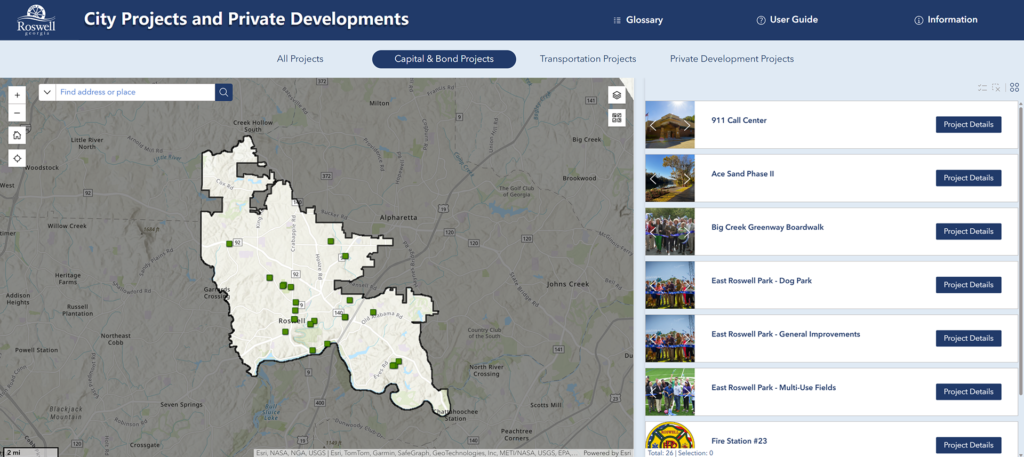
Use the City Projects and Private Developments Dashboard to find available status updates for individual projects.
Why Project Schedules Can Change
Project schedules are estimates based on the best information available at the time. As a project advances, new information may require the schedule to be refined.
Changes involving design, funding, property needs, utility coordination, approvals, bids, weather, material availability, or site conditions may affect anticipated dates.
A schedule change does not always mean a project is stalled. It may mean the project team is resolving an issue or completing a necessary step before work can safely and responsibly move forward.
Beginning construction before the design, funding, property access, approvals, and utility coordination are complete can result in rework, higher costs, and additional delays.
Completing this work in the proper order helps reduce risk, protect public funds, and produce infrastructure that will safely serve the community for years to come.
Construction may be the most visible part of a project, but it is only one chapter in a much larger story.