



Watch “The Road Before the Road”
Every infrastructure project is different, but construction is rarely the beginning of the story.
Construction is the most visible part of a transportation project, but it is only one chapter. This video explores the work required to move a Roswell transportation project from an identified need to a completed improvement.
The Journey at a Glance
Every Project Begins with a Need → From an Idea to a Public Project → Building the Project Before It’s Built → Sometimes the Longest Part Isn’t Construction → Preparing for Construction → The Part Everyone Sees
Not every project follows exactly the same timeline. Some stages may overlap, repeat, or take longer depending on the project’s scope, funding, property needs, utility conflicts, and involvement from outside agencies.
Every Transportation Project Begins with a Question
Where can we make travel safer?
How can we improve traffic flow?
Where are sidewalks or trails missing?
How do we prepare for Roswell’s future growth?
Transportation needs may be identified through adopted plans, safety and traffic data, infrastructure conditions, community feedback, development patterns, or gaps in the existing transportation network.
Before designing a solution, the City must first understand the problem it is trying to solve. Staff may evaluate existing conditions, gather data, consider how the location connects to the surrounding network, and determine whether a potential project should move forward.
Identifying a need does not mean a particular solution, schedule, or funding source has already been approved.
Because solving the wrong problem, even perfectly, is still the wrong solution.
From an Idea to a Public Project
Once a need is identified, the project begins taking shape.
Sometimes City transportation engineers complete the work in-house. Other projects require the City to select an engineering consultant with specialized expertise.
Public projects must follow transparent procurement processes designed to promote fairness, competition, accountability, and responsible stewardship of taxpayer dollars. This means a City cannot always hire a consultant or contractor and begin work immediately.
City staff also work with Mayor and Council at key points throughout the process. Depending on the project, elected officials may:
- Authorize project funding
- Approve engineering or consultant contracts
- Accept state or federal grants
- Approve right-of-way acquisitions
- Award construction contracts
These public meetings and approvals are part of how public infrastructure is planned openly and responsibly.
Building the Project Before It’s Built
With a project team in place, engineers begin gathering the information needed to develop a solution.
Depending on the project, this work may include:
- Surveying the land
- Studying traffic and crash patterns
- Locating underground and overhead utilities
- Evaluating drainage
- Reviewing environmental constraints
- Studying pedestrian and bicycle connections
- Examining property boundaries
- Estimating potential costs
Engineers use this information to develop concept designs showing how the project might solve the identified problem.
Those concepts then move into preliminary design. General ideas become detailed engineering plans. Alternatives are evaluated, technical challenges are addressed, and the design is refined as new information becomes available.
Public input may also help shape the project. Depending on its size and potential community impact, the City may gather feedback through public meetings, open houses, surveys, online engagement, or conversations with affected residents and property owners.
The project team must balance community feedback with engineering standards, safety requirements, environmental considerations, property impacts, and available funding.
Every problem solved during design is one less problem discovered after construction begins.
Sometimes the Longest Part Isn’t Construction
As designs become more detailed, another challenge may appear: there is not enough room to build the proposed improvement within the property already available.
A new turn lane, sidewalk, trail, drainage system, or intersection improvement may require additional right-of-way, easements, or temporary construction access.
Right-of-way is the property or legal access needed to build, operate, and maintain a transportation improvement.
Acquiring it can involve:
- Detailed property surveys
- Identification of affected property
- Property appraisals
- Coordination with property owners
- Negotiations
- Legal documentation
- Review and approval of agreements
- Recording the final property interests
Every affected property is different. Every property owner deserves due process, and every agreement must follow the applicable legal requirements.
This phase can sometimes take months or even years. A change to the project design may also change the property required, potentially affecting completed appraisals, negotiations, utility plans, environmental reviews, and the project schedule.
From the outside, it may appear that nothing is happening. In reality, some of the project’s most important work is taking place.
Preparing for Construction
Once major design, property, utility, and coordination challenges have been addressed, engineers complete the final design.
The final plans establish the details needed to build the project, including:
- Dimensions and elevations
- Roadway and trail alignments
- Drainage structures
- Traffic signals
- Signs and pavement markings
- Accessibility features
- Erosion-control measures
- Construction materials
- Technical specifications
- Traffic-management requirements
Utility providers may also need to finalize or complete relocations involving water, sewer, power, gas, fiber, or other communications infrastructure.
If an outside contractor will build the project, the City follows another competitive procurement process. The construction opportunity is advertised, contractors submit bids, and City staff evaluate pricing, qualifications, and compliance with the project requirements.
A recommendation is then prepared, and Mayor and Council may award the construction contract.
If bids exceed the available budget or do not satisfy the project requirements, the City may need to adjust the scope, identify additional funding, revise the plans, or advertise the project again.
Only after the necessary plans, property rights, approvals, utility coordination, funding, and contracts are in place is the project ready to move into construction.
The Part Everyone Sees
Construction is the chapter everyone recognizes, but it is only one chapter.
By this point, the project may have already traveled through years of planning, engineering, public review, right-of-way coordination, utility planning, legal processes, procurement, and collaboration.
Construction may include:
- Traffic-control installation
- Clearing and site preparation
- Utility relocation
- Drainage work
- Grading
- Concrete installation
- Roadway paving
- Sidewalk or trail construction
- Signal installation
- Striping and signs
- Landscaping and restoration
Even during construction, engineers, inspectors, contractors, utility providers, and City staff continue working together. They monitor the work, address unexpected field conditions, and ensure the project is built safely and according to the approved plans.
Eventually, the cones come down. Traffic begins to flow. Families use the new trail. Neighbors enjoy a safer sidewalk. An intersection that once caused frustration works better for everyone.
Every Road Is Built Twice
When you travel through a completed transportation project, you are seeing much more than fresh pavement.
You are seeing planning, engineering, public meetings, legal coordination, competitive procurement, construction, and countless decisions made with one goal in mind: building transportation infrastructure that will safely serve Roswell for decades to come.
Every road is built twice. First through planning. Then through construction.
That’s the road before the road.
Find and Follow a Transportation Project
Looking for information about a particular project?
The City Projects and Private Developments Dashboard provides a central place to explore Transportation projects throughout Roswell.
Residents can use the dashboard to find projects by location and view available information about project scope, current status, and progress.
A project listed in planning, design, right-of-way, utility coordination, or procurement may still be actively moving forward even when construction is not yet visible.
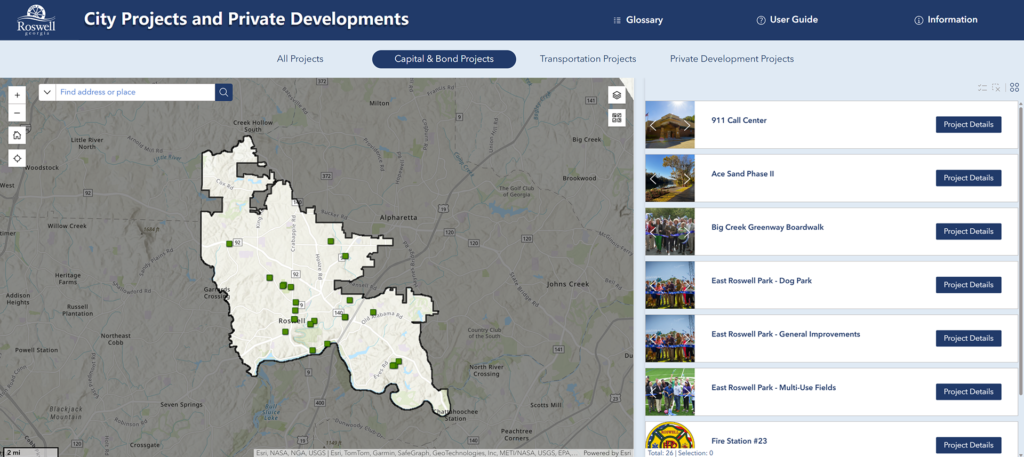
Select a project from the map or project list to view available details and status updates.